Bark Scorpion in Las Vegas: Identification, Sting First Aid, and What to Do
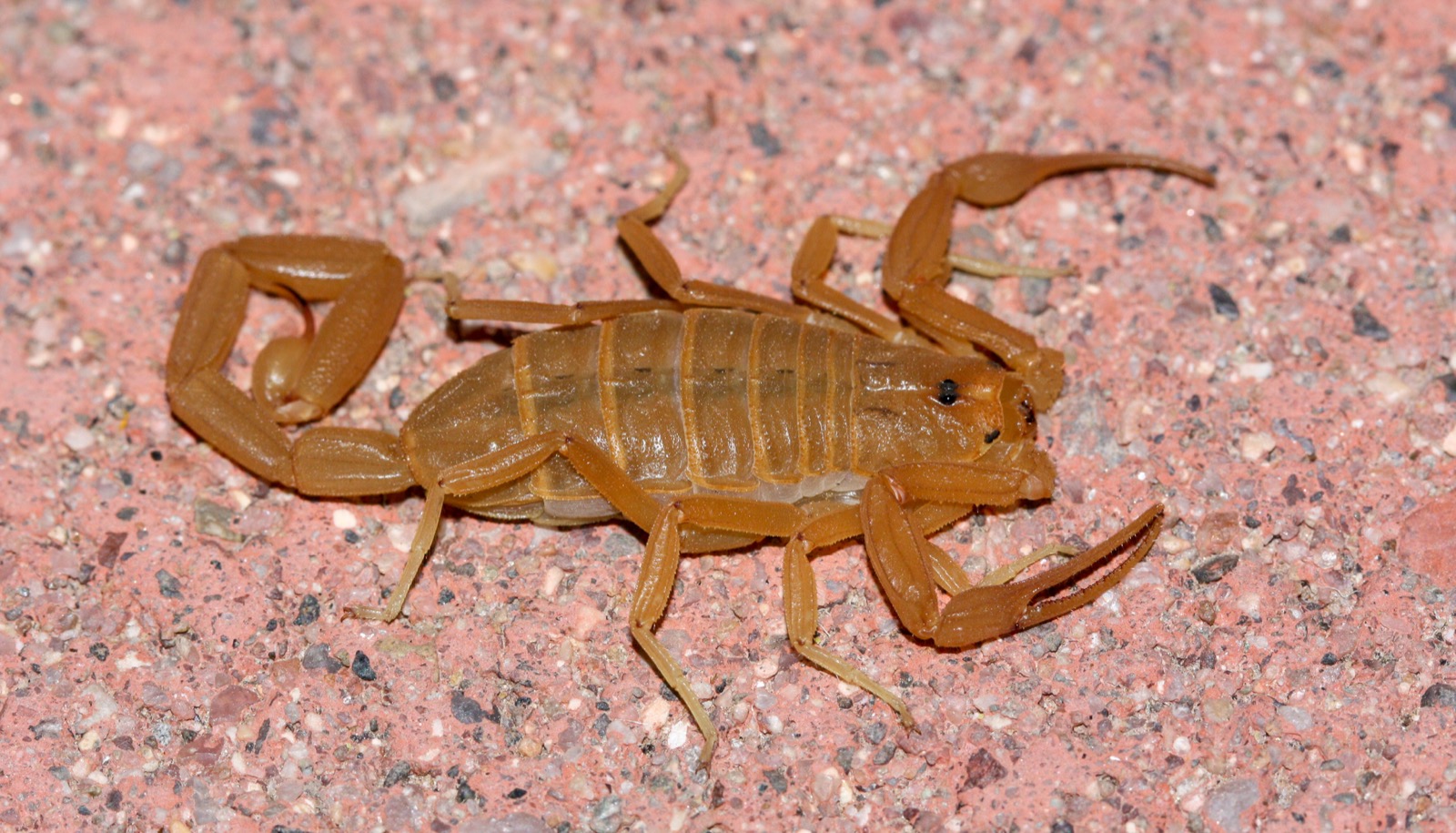
If you’ve found a scorpion in your Las Vegas home, here’s the short answer: it’s almost certainly an Arizona bark scorpion (Centruroides sculpturatus) or a stripe-tailed scorpion (Paravaejovis spinigerus). The bark scorpion is the only species in North America whose sting can be medically serious — especially for children under five, the elderly, and people with compromised immune systems. The stripe-tail’s sting hurts but is medically minor for healthy adults.
This guide walks through how to tell them apart in 30 seconds, what to do in the first 10 minutes after a sting, when to go to the ER, and how to deal with the larger problem (because if you saw one, there are more).
The Two Scorpion Species You’ll Actually See in Las Vegas
Of the ~70+ scorpion species in the southwestern US, only two show up routinely inside Las Vegas homes:
Arizona Bark Scorpion (Centruroides sculpturatus)
- Size: 2 to 3 inches long as an adult
- Color: Light tan to yellowish, sometimes with a darker stripe down the back
- Body shape: Slender, with thin pincers (pedipalps)
- Tail: Held curled to the side rather than straight back
- Behavior: Climbs walls, ceilings, and even hangs upside down — the only Las Vegas scorpion that does this
- Where you find them: Inside walls, in attics, behind baseboards, in showers and tubs (they fall in and can’t climb glass), under furniture, in shoes, in beds
Stripe-Tailed Scorpion (Paravaejovis spinigerus)
- Size: 2 to 2.5 inches long as an adult
- Color: Tan to dark brown body, with distinct dark stripes running lengthwise along the tail segments
- Body shape: Stockier, with thicker pincers
- Tail: Thicker than bark scorpion’s, held straight back
- Behavior: Ground-dweller — does not climb walls. If a scorpion is on your ceiling, it is not a stripe-tail.
- Where you find them: Garages, patios, garden beds, occasionally inside through a door sweep or weep hole
The 30-Second Identification Test
If a scorpion is in your house and you need to know which one:
- Is it on a wall, ceiling, or hanging upside down? Bark scorpion. Stripe-tails physically can’t climb most vertical surfaces.
- Are the pincers thin and pencil-like, or thick and lobster-like? Thin = bark. Thick = stripe-tail or non-medical species.
- Does the tail have visible dark stripes running along the segments? Yes = stripe-tail. No = bark.
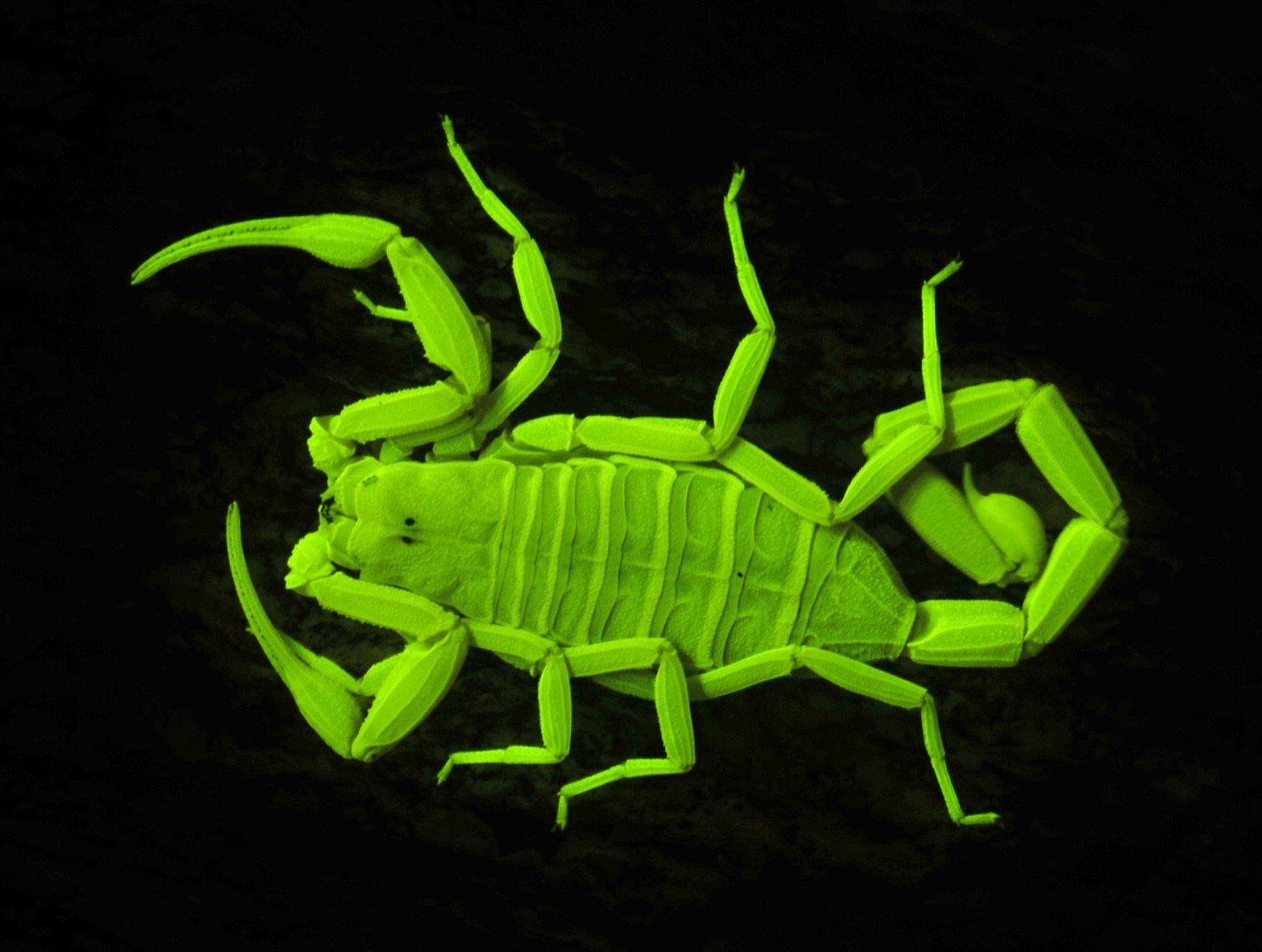
- Shine a UV (blacklight) flashlight on it. Both species fluoresce bright cyan-blue under UV light, but this only confirms it’s a scorpion — not which species.
If you can’t tell or you don’t want to get close enough to look — assume bark scorpion and treat the sting (if any) accordingly. The cost of being wrong in the safe direction is a hospital co-pay. The cost of being wrong in the other direction can be much worse for a small child.
What a Bark Scorpion Sting Actually Feels Like
Per Arizona Poison and Drug Information Center data, the medical severity of a bark scorpion sting is graded on a 4-point scale:
- Grade I (most adult cases): Local pain and tingling at the sting site only. Feels like a wasp sting that won’t quit — sharp, burning, with a numb/tingling quality. Lasts 4 to 24 hours.
- Grade II: Pain and tingling that spreads beyond the sting site to the rest of the limb.
- Grade III (children, elderly, immune-compromised): Cranial nerve symptoms — blurred or roving eyes, slurred speech, difficulty swallowing, drooling, tongue twitching, or skeletal muscle effects like uncontrollable twitching, jerking, or restless movement.
- Grade IV: Combined Grade III symptoms plus respiratory distress, very high blood pressure, or seizure-like activity. This is a medical emergency.
For a healthy adult, a bark scorpion sting is almost always Grade I or II — painful but not dangerous. For a child under five, the same sting can rapidly become Grade III or IV. This is the single most important thing to understand about scorpion stings in Las Vegas.
What To Do Right After a Sting (First 10 Minutes)
- Wash the sting site with soap and water. This removes any venom on the skin surface and reduces secondary infection risk.
- Apply a cool compress or ice pack for 10 minutes on, 10 off. Cold reduces pain and slows venom spread locally. Don’t apply ice directly to skin — wrap in a thin towel.
- Take an over-the-counter pain reliever if the person is old enough. Acetaminophen (Tylenol) or ibuprofen (Motrin/Advil) for adults. For children, follow the pediatric dosing on the label by weight, or call Poison Control before giving anything.
- Call the Poison Control hotline: 1-800-222-1222. This number routes to the regional poison control center, which for Las Vegas is the Banner Poison and Drug Information Center in Phoenix. They have the most experienced scorpion-sting nurses in the country and the call is free. Have ready: age and weight of the person stung, time of sting, body location, and any symptoms beyond local pain.
- Watch for systemic symptoms for the next 4 hours: trouble swallowing, drooling, slurred speech, blurred or roving eyes, muscle twitching, restlessness or inability to sit still, fast or irregular breathing.
When to Go to the ER
Go to an emergency room — don’t wait, don’t drive yourself if you’re the one stung — if any of these are true:
- The person stung is a child under 5 years old
- The person stung is over 65 or immunocompromised
- Any Grade III or IV symptom appears (slurred speech, eye roving, muscle twitching, breathing trouble, swallowing trouble)
- Multiple stings (more venom = more risk)
- The person has a known allergy to bee or wasp stings (cross-reactive anaphylaxis is rare but possible)
- Severe pain that isn’t responding to ice and OTC pain medicine after 30 minutes
For Vegas residents, the closest 24-hour emergency departments equipped to treat severe scorpion envenomation include Sunrise Hospital (3186 S Maryland Pkwy), University Medical Center (1800 W Charleston Blvd), Summerlin Hospital (657 N Town Center Dr), and St. Rose Dominican Siena (3001 St Rose Pkwy in Henderson). Call ahead if possible — not every ER stocks Anascorp antivenom, and the larger hospital systems are more likely to have it.
Anascorp: The Antivenom That Changed Pediatric Scorpion Care
Anascorp is an FDA-approved antivenom for severe bark scorpion stings, manufactured by Instituto Bioclon. Before it was approved for US use in 2011, severe pediatric scorpion stings in Arizona and Nevada were treated with sedation and respiratory support, sometimes for days. Anascorp typically resolves Grade III and IV symptoms within an hour of administration.
You don’t need to know the dose or the protocol — your ER does. What you do need to know: not every ER carries it. If you’re driving a child with severe symptoms to the hospital, call ahead and ask “do you have Anascorp on hand or do you need to order it from another facility?” If they don’t have it, call the next-closest hospital. Five minutes of phone time can save hours of waiting once you arrive.
You Found One Scorpion. How Many Are in Your House?
The honest answer: more than one. Bark scorpions are not solitary in the way that, say, a black widow spider is. They cluster around food (insects), water (leaky outdoor plumbing, irrigation, pool pads), and shelter (any crack wider than 1/16 of an inch). If conditions are right for one, they’re right for several.
The University of Arizona Cooperative Extension’s research on residential scorpion populations in the Phoenix and Tucson metros — which share the same Mojave/Sonoran ecological zone as Las Vegas — found that the median residential population in homes with confirmed bark scorpion sightings was 8 to 30 individuals, with outlier homes (typically those near desert washes or with significant landscape debris) hosting populations in the hundreds.
If you’ve seen one, the next step isn’t crossing your fingers. It’s a UV-light night inspection of the perimeter and interior — scorpions glow bright cyan under a 365nm UV flashlight, making them easy to find at night when they’re active. We cover how to do this, and what to do if you find a serious population, in our guide to keeping scorpions out of your home and our cost guide for professional scorpion treatment.
Frequently Asked Questions
Are scorpions in Las Vegas dangerous?
One species — the Arizona bark scorpion — is medically significant, particularly to children under five, the elderly, and people with weakened immune systems. The other common Vegas species, the stripe-tailed scorpion, has a sting that’s painful but rarely dangerous to healthy adults.
What time of year are scorpions most active in Las Vegas?
April through October. Peak activity is May through September when nighttime temperatures stay above 70°F. Scorpions are largely inactive November through March, but they don’t die off — they just hide and wait.
Will a UV flashlight kill a scorpion?
No. UV light only makes them visible because their exoskeleton fluoresces. They are unaffected by it otherwise. The flashlight is a detection tool, not a control tool.
Do mothballs or essential oils repel scorpions?
No. Despite widespread internet claims, peer-reviewed pest research has repeatedly shown that neither mothballs nor lavender, peppermint, cedar, or any other essential oil reliably repels scorpions. Save your money for things that actually work — exclusion (sealing entry points) and targeted insecticide treatment.
Can scorpions come up through drains?
Yes, occasionally. They don’t actively swim up through plumbing, but they can fall into bathtubs and showers from above (climbing the walls, then losing grip on the smooth surface) and become trapped because they can’t climb back out of glass or porcelain. If you find a scorpion in your tub, it almost certainly didn’t come up the drain — it came in from elsewhere and got stuck.
What should I do with a scorpion I find inside?
If you can do it safely, capture it under a glass jar with a piece of paper slid underneath, then release it at least 100 feet from your home. If you don’t want to handle it, kill it — long tongs, a heavy shoe, or a vacuum cleaner with a long hose attachment all work. Don’t pick it up bare-handed even if it appears dead. Then start looking for entry points and consider a UV night inspection or a call to a scorpion-specialist pest control company.
Sources used in this article: Arizona Poison and Drug Information Center; University of Arizona Cooperative Extension; Banner Health envenomation protocols; FDA prescribing information for Anascorp; Mayo Clinic guidance on scorpion stings; Centers for Disease Control and Prevention guidance on insect and arthropod bites.